Archive
Brain Science
Explore the latest in brain injury research and science, and how this major public health problem is being addressed.
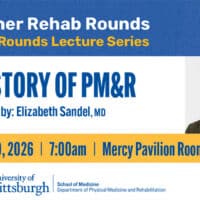
Dr. Sandel’s talk at the University of Pittsburgh
On August 19, Dr. Sandel gave a talk to the PM&R residents, fellows, and faculty at the University of Pittsburgh, about the history of the medical specialty.
The site visit also included meetings with many of the faculty and trainees, and tours of the Human Engineering and Research Laboratories and the Rehabilitation and Neural Engineering Laboratories, where cutting edge biomedical and clinical research, and inventions to help people with disabilities have been ongoing for decades.

Physical Medicine and Rehabilitation Growth from the 1940s to 2025: The US Government’s Role
PM&R or physiatry, a very small medical field in the 1940s, seemed destined to remain small, if not disappear. Over time, the growth curve did become steeper. The US Government, beginning in the Progressive Era, was a significant contributor to that growth, directly and indirectly, benefiting people with disabilities of all ages .
Federal Funding for TBI Research, Education, and Prevention: Maybe Some Good News
In April 2025, devastating news emerged about CDC funding for TBI programs, with key staff positions eliminated and no federal TBI funding through reauthorization. However, this challenging period has shifted. On May 21, 2026, the House Energy and Commerce Committee advanced bipartisan legislation to reauthorize federal TBI program funding until 2029.

Viruses Cause Brain Injuries: Prevention is the Best Strategy
Most of us don’t think about the risks of viruses attacking the brain because it’s typical for other systems in the body, like the respiratory and gastrointestinal systems or the skin, to be attacked by viruses. But many viruses attack the brain, too, causing severe inflammation of the brain and spinal cord. Anti-viral treatments may be unavailable or ineffective. Preventive measures (especially vaccination, if available) are the best strategies. Our public health systems, and therefore our entire US population, are now threatened by government misinformation and vaccine policy changes, so there is a resurgence of these diseases.
Sudden Insights and the Brain: The Aha Moment
The term insight can refer to a variety of human cognitive processes. An insight could derive from logical formations of ideas through analytic reasoning. Another kind of insight, the sudden creative idea, or the unexpected solution to a problem, is referred to as an “aha moment,” or an “aha experience.” Researchers are studying what brain activity underlies insight, and specifically the aha moment, through advanced technologies. This blog provides some possible ways to promote insight and the aha moment in our daily lives and work.

Flying in the Face of Facts: Denialism, Anosognosia, and the Human Brain
When someone refuses to accept an empirically verifiable reality, they call upon irrational thought processes and behaviors that produce denialism. People sometimes process information to reach conclusions driven not by rational analysis, but by specific motivations or beliefs.

Generosity: Neuroscience and the Golden Rule
Generosity is the act of giving to others without an intended benefit to oneself and may come in the form of time, effort, money or other resources. It is not a transaction or a “quid pro quo,” i.e., the act of giving something with an expectation of a reward. Researchers note that generosity likely evolved as an adaptation to promote human survival, and indeed the survival of other species as well. Generosity is one of a variety of human behaviors that benefit others and even the person being generous, or contribute to the common good.

The Human Brain: Highly Evolved or Doomed to Failure?
Protecting our planet so it can continue to sustain life requires a comprehensive and collective vision, with clear strategies and tactics. Richer nations have the resources to do the most to prevent catastrophe, as well as the greatest responsibility for causing it, but are taking little or no action. What is it about the highly evolved human brain that is not capable of saving our planet from extinction? Greed and materialism are a big part of the problem but so are other destructive human traits and behaviors. Can we foster constructive traits and behaviors to save our world?
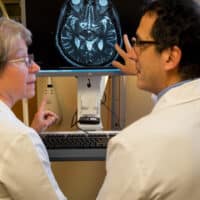
Physiatry: An Introduction to PM&R
What is Physiatry? Physical Medicine and Rehabilitation (PM&R) physicians, also known as physiatrists, treat a wide variety of medical conditions that affect the central nervous system (the brain and spinal cord), the peripheral nervous system (other nerves), and the musculoskeletal system (the bones, joints, and associated soft tissues). Physiatrists have…

Dr. Sandel: 2025 Plans
Here’s an update on Dr. Sandel’s professional plans for 2025.

Is There a Connection Between Mild TBI and Mental Health Disorders in Adults and Children?
In a recent study, researchers at Kaiser Permanente found that risks for affective and behavioral disorders were significantly higher in the years post-injury for children and adolescents with a history of mTBI—especially for 10- to 13-year-olds. They emphasize the importance of regular interval screening for affective and behavioral disorders in children and adolescents who sustain a mild TBI. This post includes a slide presentation and Q & A with two of the researchers, Richard Delmonico, PhD, and Brian Theodore, PhD.
How Does Brain Trauma Affect Brain Hormones?
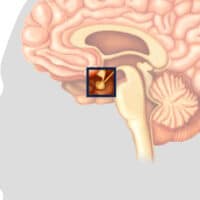
Evaluating and treating people with hormonal deficiencies after traumatic brain injury (TBI) can be very challenging. Learn about the screening and treatment of pituitary deficiencies that may occur in both the acute and chronic stages after a concussion or other TBI.
Keep up to date
Get updates on the latest in concussion, brain health, and science-related tools from Dr. Elizabeth Sandel, M.D.
By clicking SIGN UP, you agree to receive emails from Dr. Sandel and agree to our terms of use and privacy policy.
